


A day that starts without a plan can leave you deciding everything from breakfast to bedtime while you are already busy. A Healthy daily routine can make those choices feel easier and support your energy, health, and mind.
In the title, “healthy” points to choices that support well-being. “Daily” means practicing them regularly, while “routine” means repeatable actions. “Better living” is the hoped-for benefit, not a promise of perfect days.

Your routine should fit real life, including busy mornings, changing needs, and days when plans fall apart. You can start with one small change and adjust it until it fits your real life.
Key Takeaways
- Choose a few habits that support your health and energy.
- Build around waking, meals, and bedtime.
- Pair a new habit with an action you already do.
- Keep each habit small enough to repeat on busy days.
- Review your routine and change what is not working.
- Make room for rest, relationships, and changing needs.
1. What Makes a Daily Routine Healthy?
A useful routine gives your day a few dependable anchors without deciding every minute in advance. Waking, meals, and bedtime can give your schedule shape while leaving room for change.
A daily routine is a sequence of actions you follow regularly. A wellness routine can include movement, sleep, meals, work or study, social time, and self-care. That mix helps support a healthy body and mind without making every hour feel planned.
Build around a few steady anchors, then leave room for the day to change.
Repeated actions can become habits, which may support helpful choices or reinforce unhelpful ones. A regular time for lunch, for example, can make it easier to pause instead of working straight through.
These benefits do not depend on following a strict timetable. Your needs may change from one day to the next, and an occasional missed habit does not erase your progress.
Keep the structure that supports you and loosen any part that adds more pressure than help.
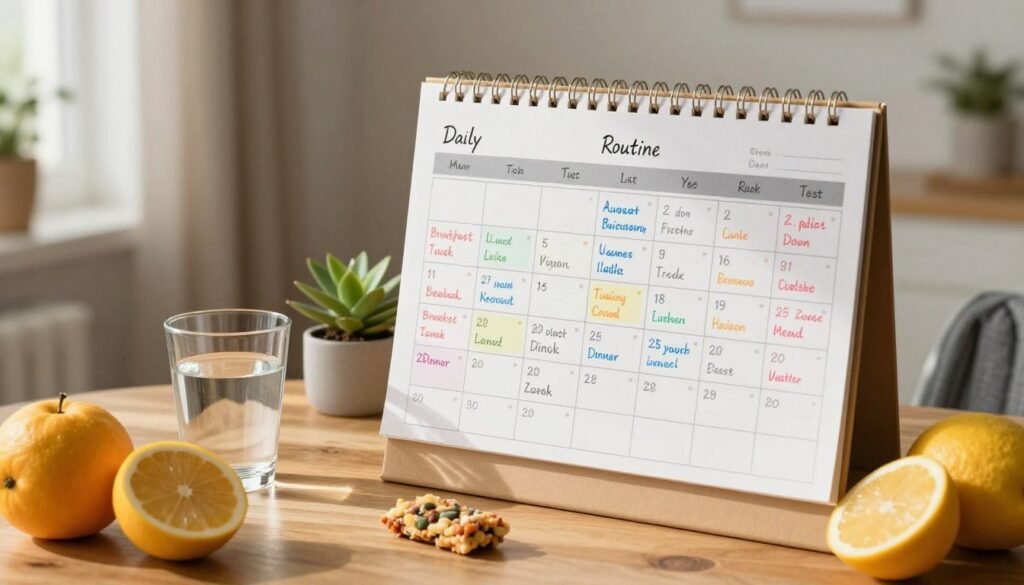
2. How to Build a Healthy Daily Routine That Sticks
The easiest routine to keep usually begins with one or two changes that already fit into your day. Choose a small action you can repeat, even when your schedule gets crowded.
Habit stacking means pairing a new habit with an action you already do so the existing action reminds you to do the new one. The cue should happen often and feel dependable. A clear cue can save you from relying on memory alone.
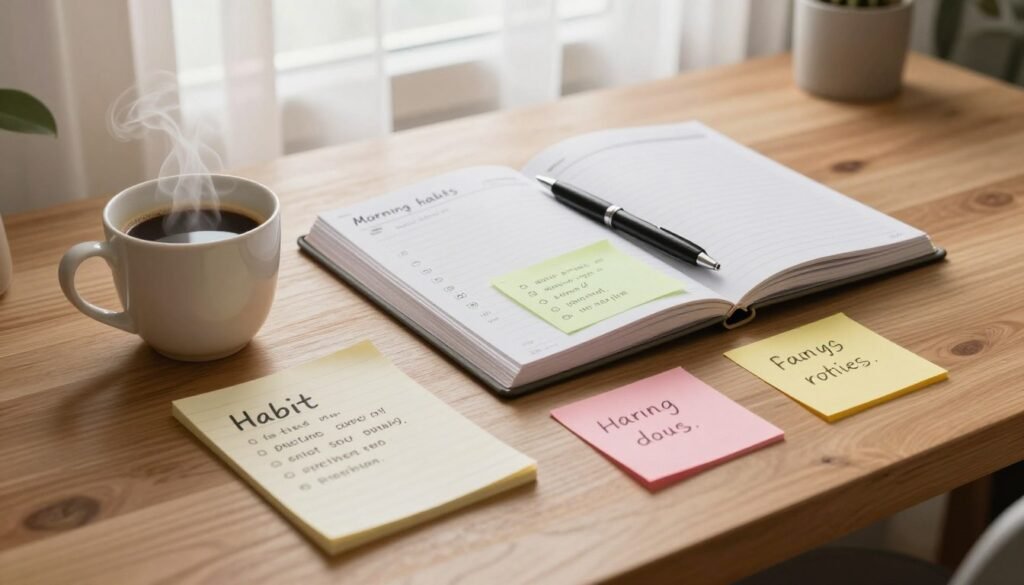
Start with one or two small habits
Pick a habit that takes little time and solves a real problem for you. If you want more movement, begin with a brief walk after lunch rather than planning a long workout every day.
Make the first step easy to see and start. Put walking shoes by the door, leave a book beside your bed, or set a filled water bottle near your workspace.
A small version still counts when your day gets busy. You can stretch for a few minutes instead of skipping movement because you cannot fit in a longer session.
Use an existing action as your cue
Pair the new action with something that already happens. This practice, called habit stacking, turns a familiar moment into a reminder.
For example, stretch while your coffee brews. Keep the stretch gentle and brief, so you can finish before the coffee is ready.
| Existing cue | New habit | Smallest version | Example |
|---|---|---|---|
| Making coffee | Stretch | Stretch for 5 minutes | Stretch while coffee brews |
| Finishing lunch | Walk | Walk for 5 minutes | Walk around the block |
| Getting ready for bed | Plan tomorrow | Write 3 priorities | Write them in a notebook |
Track progress and adjust each week
Use a paper calendar or a simple note to record each time you complete the habit. A check mark gives you a quick view of what you did, without turning tracking into another large task.
Once a week, ask what helped, what felt difficult, and what one change you want to try. If a cue keeps getting missed, attach the habit to an action that happens more reliably.
Adapt the plan to your needs and life stage
A healthy daily routine for women and a healthy daily routine for adults should reflect each person’s schedule, preferences, health needs, and life stage. A plan for someone with school-age children may differ from one for a person working nights.
Your work hours, caregiving duties, health, and access to time can change which habits are realistic. If your day is unpredictable, choose a habit that can move with you, such as a short walk during a break.
For more ideas on sustainable weight changes, see ways to stay fit naturally. If you miss a day, restart with the smallest version of the habit rather than trying to make up for lost time.
3. What Should You Do in the Morning?
A morning routine can be only a few calm minutes before breakfast or the day’s first responsibility. Natural light, drinking water, a little movement, a healthy meal, and one clear goal can help you start your day simply and positively.
Adjust the order to your wake time and needs. You do not need to complete every option before work, school, or caregiving begins.
Start with light and hydration
If it suits your schedule, get natural light within 30 minutes of waking. Open the curtains or step outside for a few minutes while you get ready.
A glass of water can be part of your morning routine. Keep it by the sink or coffee maker if that makes the habit easier to remember.
Choose movement that feels manageable
Pick movement that fits the time you have and feels comfortable for your body. A 30-minute walk is one option, while 5-10 minutes of stretching may suit a tighter morning.
These are choices, not tasks you must do together. If you feel stiff after waking, try gentle stretching; if you have more time, take a walk.
Eat breakfast and set a daily intention
Breakfast can include a protein source and fiber, such as eggs with whole-grain toast or yogurt with fruit. Your needs and food preferences may call for another mix.
Before you leave, name one priority for the day. A short note can help you focus when several tasks compete for attention.
For more ideas, read these healthy morning habits for women. You can also explore period habits for women as separate reading about changing needs.
Choose a morning habit that still feels doable on a rushed weekday.
4. How Much Movement and Exercise Do You Need?
A practical weekly target for adults is 150 minutes of moderate activity or 75 minutes of vigorous activity. You can also combine the two and spread your activity across several days.
Moderate activity, such as brisk walking, raises your effort while still letting you talk. Vigorous activity, such as running, takes more effort and makes conversation harder. Choose the pace that suits your fitness and health.
Meet weekly activity targets in a way that suits you
Short sessions can add up across the week. A sample workout might include a 5-minute warm-up, 20 minutes of exercise, and a 5-minute cool-down.
Start with an activity you enjoy, then make the time fit your schedule. If running feels too hard, brisk walking or cycling may be easier to repeat.
- Brisk walking outdoors or on a treadmill
- Cycling on a path or stationary bike
- Swimming at a pool or fitness center
- Dancing at home or in a class
For another perspective on safe weight goals, read guidance on losing weight safely. Weight change is not the only reason to move; activity can support heart health and energy.
Add movement beyond a planned workout
Brief movement breaks can complement planned exercise. Stand, walk to refill your water, or stretch between tasks when you have been sitting for a while.
These breaks add movement to your day, but they do not replace the weekly activity target. Keep the plan realistic, especially when you are starting or returning after time away.
Pick an activity you are willing to repeat, then put realistic sessions on your calendar.
5. What Should You Eat Throughout the Day?
A balanced meal can be simple: combine a protein source with fiber-rich foods and a fruit or vegetable when available. Variety matters more than one perfect menu, and your meals can reflect your culture, budget, and preferences.
Whole grains, beans, eggs, fish, tofu, fruits, and vegetables can all fit into meals. Choose foods that leave you satisfied and suit your usual day. Practical meals are easier to repeat than complicated plans.
Build meals around variety and balance
Try to include protein and fiber-rich foods at meals, then add fruits or vegetables when you can. Breakfast might combine yogurt, oats, and fruit; lunch could pair beans with vegetables and brown rice.
These are examples, not rules for every person. Your health needs, food access, and appetite can shape what works throughout the day.
Use nutrition guidelines as practical guardrails
The 2025-2030 Dietary Guidelines for Americans give general amounts for adults. The adult protein range is 1.2 to 1.6 grams per kilogram of body weight each day.
| Guideline | Amount or limit | Everyday application |
|---|---|---|
| Adult protein | 1.2-1.6 grams per kilogram daily | Include a protein source across meals |
| Saturated fat | Up to 10% of daily calories | Check labels and vary fat sources |
| Added sugars in one meal | No more than 10 grams | Compare added sugar on food labels |
| Whole grains | 2-4 servings daily | Choose oats or whole-grain bread |
The guidelines also say children should avoid added sugars until age 10. That advice applies to children, not as a separate adult target.
General nutrition guidance may not fit every medical condition or treatment plan. For more site information, read the health and wellness disclaimer.
If a health condition affects your food choices, ask a qualified health professional for advice suited to you.
6. How Can You Build a Better Bedtime Routine?
The evening is easier to settle when you give your body and mind a consistent signal that the busy part of the day is ending. Most adults ages 18 to 64 should aim for 7-9 hours of sleep each night, though needs vary.
A regular sleep-wake schedule means keeping a consistent bedtime and wake time. Try to keep both within about a half hour from day to day. Steady timing can make it easier to settle into a pattern.
Keep sleep and wake times consistent
Choose a bedtime that leaves enough room for your usual sleep need before you must wake. Weekends may shift your schedule, but keeping the times close can help preserve a steady rhythm.
If you cannot control your work hours, keep the parts you can steady. A familiar wind-down ritual can still mark the end of your day.
Wind down with a repeatable evening ritual
Start winding down at least an hour before bed if that fits your life. Dim the lights, read, stretch gently, or write down thoughts that keep circling.
Limiting screens during that hour is one option, not a universal rule. Use the approach that helps you relax without adding stress or making bedtime feel like another task.
- Prepare tomorrow’s essentials
- Stretch lightly
- Write down unfinished thoughts
- Name 3 things you are grateful for
A simple gratitude practice helps you focus on small things that went well during the day. You can write down three things or quietly think about them before bed.
If sleep problems continue or affect your daily life, talk with a health professional.
7. How Can You Set Healthy Screen Boundaries?
A good screen-time limit helps protect what matters most, such as getting enough sleep, staying active, and spending time with loved ones. Look at what media use replaces, not just the minutes on a screen.
The American Academy of Pediatrics says there is not enough evidence for one screen-time limit that fits every child and teen. Its screen guidance for children focuses on content, balance, communication, and shared media use. Age and context matter.
Judge screen use by what it replaces
Ask whether media use is crowding out sleep, physical activity, schoolwork, or face-to-face connection. The same screen activity can serve different purposes, from homework to watching a show.
Talk with children about what they watch and play. Co-viewing can help you discuss content, while open communication makes it easier to adjust rules as needs change.
Create family rules that can flex with age
A healthy daily routine for kids should fit their age and family needs, not one screen-time number for every child. A preschooler and a teenager may need different boundaries.
Families can set screen-free times and places, such as meals around the table. Use that time to talk, read, play a simple game, or go outside together.
A shared rule works best when adults follow it too. Put phones away during a family meal, unless someone needs theirs for a specific reason.
Review family screen rules when they stop working for your child’s age or daily needs.
8. How Can You Keep Healthy Habits on Busy Days?
A packed schedule does not rule out healthy habits if you use the gaps that already exist. Brief habits can fit between tasks, even when work, classes, or caregiving fill most of your day.
A healthy daily routine for students can fit around classes, assignments, meals, and sleep. Adults can attach brief habits to transitions, such as walking after a meeting or pausing before starting a new task.
Make small gaps in your schedule useful
Try one option during a break, then return to your task. Short pauses can help you change focus without needing a long block of free time.
- Take a 5-10-minute walk.
- Use box breathing for 4 cycles, with 4-second intervals.
- Try 5-5-5 grounding: name 5 things you see, hear, and feel.
- Keep a water bottle within reach.
The grounding practice takes about 3 minutes. Box breathing gives you a simple count to follow when stress or anxiety makes it hard to pause.
Prepare simple defaults for work or school
Meal prep once or twice per week can make quick meals easier on busy weekdays. Cook a grain, wash produce, or portion a few items you already enjoy.
Keep a fallback habit short enough for your hardest days. A five-minute walk or one minute to fill your bottle can keep a routine from feeling all-or-nothing.
Find more wellness ideas on the Serene Fuel home page. Set out one useful item, such as walking shoes or a water bottle, before your next busy day begins.
9. What Could a Realistic Daily Routine Look Like?
A workable day might begin at 7:00 a.m., include a real lunch break, and leave enough time to wind down before bed. Healthy daily routine examples are starting points, not perfect timetables or required targets.
The sample below uses common anchors, with space for work or school and a brief movement break. Shift the times to match your actual day.
| Sample time | Routine anchor | Flexible example |
|---|---|---|
| 7:00 a.m. | Wake and prepare | Drink water, get daylight, and stretch briefly |
| 9:00 a.m. | Work or school | Take a brief movement break between tasks |
| 12:00 p.m. | Lunch break | Eat away from screens when possible |
| 10:30 p.m. | Bedtime | Wind down before sleep |
A my daily routine example should change with work hours, caregiving, school, and sleep needs. Someone who starts work early may need an earlier bedtime or a different lunch hour.
Use the sample as a guide, then move each anchor to a time that fits your life.
Shift the sample times to match your own responsibilities, then keep the habits that feel sustainable.
10. Conclusion
A better daily rhythm does not require a flawless plan or a complete life overhaul. Consistency matters more than building an elaborate routine, and small habits can support wellness over time.
Some habits will need to change as your work, health, or family life shifts. Adjusting a habit is part of making it sustainable, not proof that you have failed.
Notice the small things that help you feel steady, including a moment of gratitude or a calmer start. Choose one small habit to try tomorrow, attach it to something you already do, and give yourself permission to adjust it.