


Regular movement can help people keep strength, balance, and independence as abilities shift with age. Simple exercises for healthy aging can also support daily tasks, from getting up from a chair to carrying groceries. The goal is steady progress, not a complex fitness plan.
A February 2026 study in JAMA Network Open followed nearly 5,500 women over 65. Researchers linked greater leg strength with a lower risk of death over the next eight years. This finding adds to the benefits of staying active, while not proving that strength alone caused the result.

Physical therapist Christina Ruggeri of Harvard-affiliated Spaulding Rehabilitation offers practical guidance. Learn how to do each exercise, build a simple weekly routine, and protect your back and body with safe, comfortable movements. Chair sit-to-stands and supported balance exercises can easily fit into your daily activities without any special equipment.
Key Takeaways
- Small, regular movements can support health, fitness, and daily life.
- Leg strength was linked with lower mortality in one study of older adults.
- Simple moves can suit adults at different ability levels.
- Learn how to do each movement with care.
- Build a clear workout plan and know what to follow or avoid.
1. How Exercise Supports Strength, Balance, and Healthy Aging
Different kinds of activity train different skills. As people age, muscle mass may drop by up to 8% each decade after 30, with a faster decline after 60. Strength and balance work helps older adults practice daily tasks, such as standing from a chair or climbing stairs. Aerobic movement supports fitness, while flexibility can make motion feel easier.
Walking supports heart health, but it does not train every skill. A physical therapist can help tailor movement to a person’s ability and needs. Exercise physiologist Peter Ronai, a clinical professor at Sacred Heart University in Fairfield, Connecticut, and Dr. Elizabeth Joy, a Salt Lake City physician who chairs the American College of Sports Medicine’s Exercise Is Medicine program, emphasize the value of varied activity.
HHS guidance for adults ages 18–64 recommends:
- 150–300 minutes of moderate activity each week, or 75–150 minutes of vigorous activity.
- Strength training on two days each week.
Regular activity may help prevent or improve heart disease, diabetes, obesity, depression, and some cancers. It can also support muscle strength, daily activities, and independence. These benefits help the body meet changing demands through life.
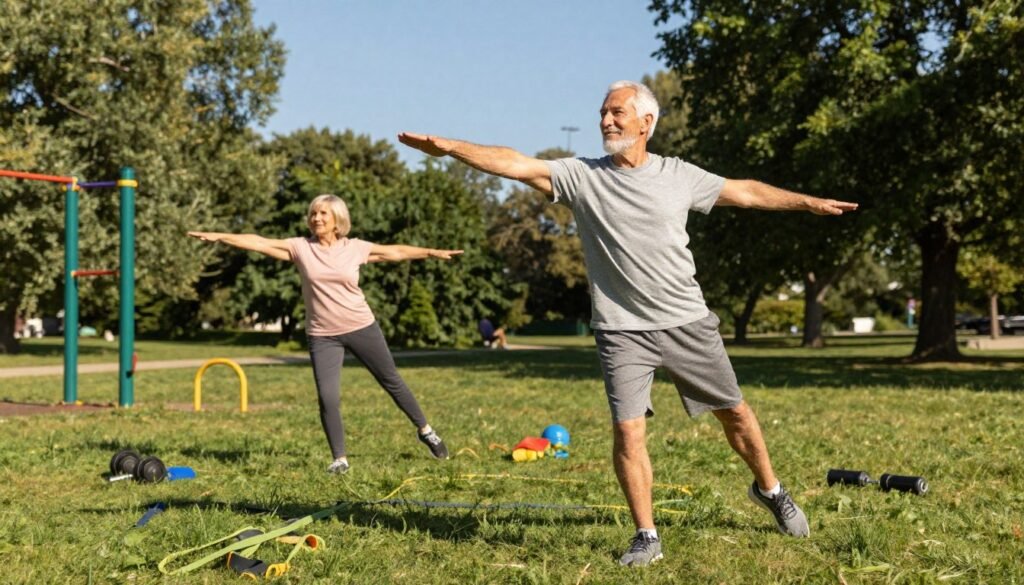
2. Exercises for healthy aging that build strength
These simple moves train the legs, hips, and calves used in daily tasks. Keep a sturdy support nearby, and work at a pace that suits your ability.

Chair sit-to-stands
Stand in front of a sturdy chair with arms crossed over your chest. Lower until you tap the seat, then stand tall. A pillow makes the chair easier to reach. Aim for two sets of 10 on most days, resting one to two minutes between sets. When this feels easy, pause in a shallow squat for three to five seconds. This builds leg strength used to rise, get out of a car, or climb stairs.
Glute sets
Squeeze your buttock muscles together, hold, then relax. Physical therapist Christina Ruggeri suggests using a red light as a cue: hold through its 30-to-90-second wait. These gentle muscle contractions support the hips and back.
Move with control, and choose a range of motion that feels comfortable.
Heel raises
Hold the chair for support, lift both heels, and balance on the balls of your feet. Then slowly lower your heels back down. Work toward two sets of 10 repetitions at least every other day. To make it more challenging, pause for three to five seconds at the top.
| Move | Starting target | Progression or reference |
|---|---|---|
| Chair sit-to-stands | Two sets of 10 most days | Rest one to two minutes; add a three-to-five-second squat hold |
| Glute sets | Squeeze and hold | Use red-light waits of 30 to 90 seconds |
| Heel raises | Two sets of 10 every other day | Pause three to five seconds at the top |
| Five-times sit-to-stand | 40–49: 7.6 sec; 50–59: 7.7 sec; 60–69: 7.8 sec | 70–79: 9.3 sec; 80–85: 10.8 sec |
3. Balance and mobility exercises for staying active
Steady movement helps train coordination and posture. These simple steps need little space, and a counter can add support. Start at a pace that suits your ability.
Single-leg stands to practice steady balance
Stand beside a sturdy counter and rest your hands on it lightly. Shift your weight to one foot, then lift the other a few inches. Hold for 10 to 15 seconds, then switch sides. Repeat five times per foot, and work toward Christina Ruggeri’s 30-second goal.
This balance skill asks one leg to support your body weight. It can help with daily activities like stepping into a tub, climbing stairs, or getting into a car. Keep both feet near the floor, and ask a physical therapist or therapist about a safe range of motion if you feel unsure.
Side steps and shoulder blade squeezes for coordination and posture
Hold a kitchen counter or sturdy table as needed. Step to the right 10 times, then to the left 10 times. Keep your back tall and your motion controlled. This activity works leg muscles and supports flexibility.
To ease tightness, draw your shoulder blades together and down. Hold for three seconds, then relax. Repeat 10 times several times a day. These exercises can build strength and flexibility without a large range of motion. Before harder balance practice, especially with eyes closed, have someone nearby.
4. How to build a sustainable weekly exercise routine
A lasting plan pairs aerobic activity with strength training and brief movement breaks. Start with a schedule you can keep, then add time as your fitness grows.
Christina Ruggeri recommends at least 30 minutes of moderate aerobic activity on five days each week. HHS guidance sets a weekly goal of 150–300 moderate-intensity minutes, or 75–150 vigorous-intensity minutes. If you are not near that target, build up over time.
Pair aerobic activity with strength training and regular movement breaks
- Schedule strength training on two days each week. Add balance exercises and flexibility work to support a range of daily activities.
- Walking supports heart health, but Peter Ronai notes that it does not address muscle loss, bone-density loss, or power on its own.
- Laundry and grocery shopping may not reach moderate intensity. Add purposeful walking, such as extra trips up and down the stairs.
During long sitting periods, stand every 30–45 minutes, even if you simply stand and sit back down. These brief breaks help people keep moving throughout the day and make a weekly routine easier to maintain.
5. What to follow—and what to avoid—for safer exercise
A safe routine starts with a smart setup, not a test of willpower. Keep a sturdy counter or table close during balance practice. Plant both feet, and ask someone to stay nearby before trying eyes-closed or other hard variations. If a move feels unstable, choose an easier option. A pillow on the chair can shorten the distance to the floor.
- Build strength and strength training demands in small steps. Keep your body steady, breathe through each effort, and stop if pain changes your movement. Good form can protect your back.
- During abdominal drawing-in exercises or pelvic floor work, do not hold your breath or tighten unrelated muscles. This helps avoid extra strain on your back.
- Ask a physical therapist about strength, balance, or coordination concerns instead of pushing through a difficult move. A therapist can adapt activity to age, health, and ability, including for adults with diabetes.
- Christina Ruggeri notes that laundry and grocery shopping may not count as moderate activity. Add purposeful walking, and build up over time. Use body weight only when steady; check that each foot stays planted.
People can repeat a move only as many times as control allows. This approach helps older adults stay active while supporting daily activities and muscle use. Brief movement has value, but it does not replace aerobic exercise. Move with care and give muscles time to recover.
6. Conclusion
Varied exercise builds strength, balance, and skills that support an independent life. These exercises can help adults manage daily activities through healthy aging.
Start chair sit-to-stands with a sturdy chair, adding a pillow if needed. Work toward two sets of 10 most days. Each week, aim for 150–300 minutes of moderate aerobic activity, plus muscle work on two days, in line with HHS guidance.
Stand every 30–45 minutes during long sitting times, as physical therapist Christina Ruggeri recommends. Use sturdy support during balance practice, breathe steadily, and avoid holding your breath. Contact a physical therapist if movement feels unsafe or causes concern. Small, steady steps can support health, fitness, and lasting benefits.