


About 10 million men and women in the United States have osteoporosis, a condition that makes bones weak and more likely to break. A fracture can cause pain, limit daily tasks, and raise medical costs. In severe cases, it can also increase the risk of death.
Bone strength can change without clear signs. A clinician may use dual-energy X-ray absorptiometry, or DXA, to measure bone mass and check fracture risk. These results help guide care. Knowing your risk can help you take steps to protect your health and independence.

This guide covers osteoporosis treatment, including medicines such as bisphosphonates, which the Endocrine Society identifies as the medicines most often used for this condition. It also shares natural ways to support bone strength: getting enough calcium and vitamin D, doing weight-bearing exercise, quitting smoking, and reducing fall risks at home. The information can help you discuss options with a clinician and make a plan that fits your needs.
Key Takeaways
- Millions of people in the United States live with weak, fragile bones.
- DXA scans help clinicians measure bone mass and assess fracture risk.
- Bisphosphonates are commonly used medicines for this condition.
- Calcium, vitamin D, and weight-bearing exercise support bone strength.
- Quitting smoking and preventing falls can help protect mobility and independence.
1. What Is Osteoporosis?
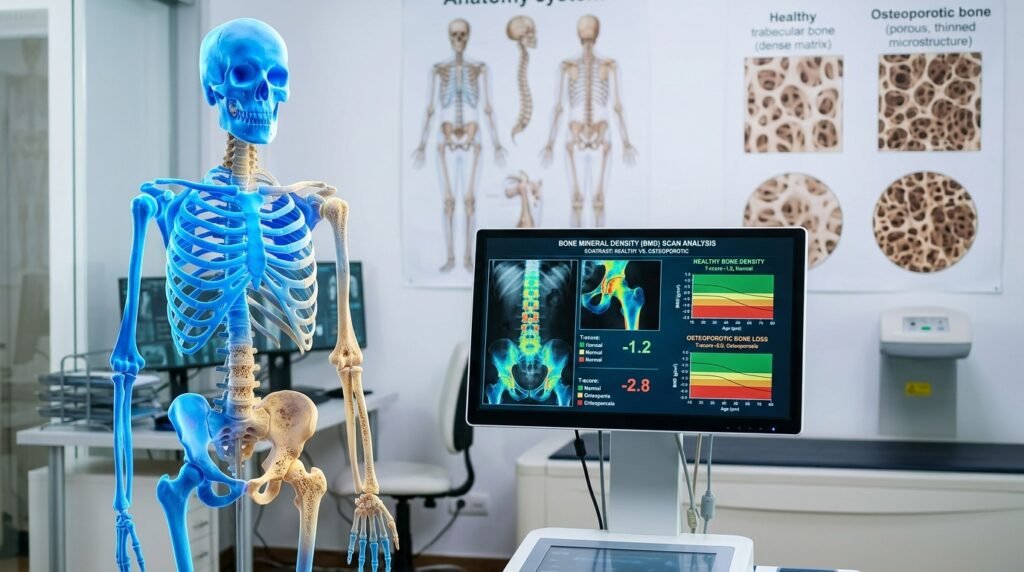
Osteoporosis is a progressive disease that lowers bone mineral density and weakens the inner structure of bone. As bone mass falls, the skeleton may lose strength, and bones can break more easily. The condition often develops without clear signs, so a person may not know their risk until a fracture occurs.
How Low Bone Density Affects Bone Strength
A DXA scan measures bone density and reports a T-score. This score compares a person’s bone mass with that of a healthy young adult. A clinician considers the result along with age, body size, health history, and other risk factors. One scan result is only part of the picture.
Osteopenia and Other Bone Mass Results
World Health Organization categories define normal density as a T-score of −1.0 or higher. A score from −1.0 to −2.5 indicates osteopenia, or bone mass below the normal range. A score of −2.5 or lower indicates osteoporosis. Osteopenia does not mean a fracture will occur, but it can signal a need for follow-up.
Postmenopausal women have higher rates, yet men can also receive a diagnosis and have approved care options. A clinician can explain what the findings mean for each person.


2. How Bones Change and Lose Mass Over Time
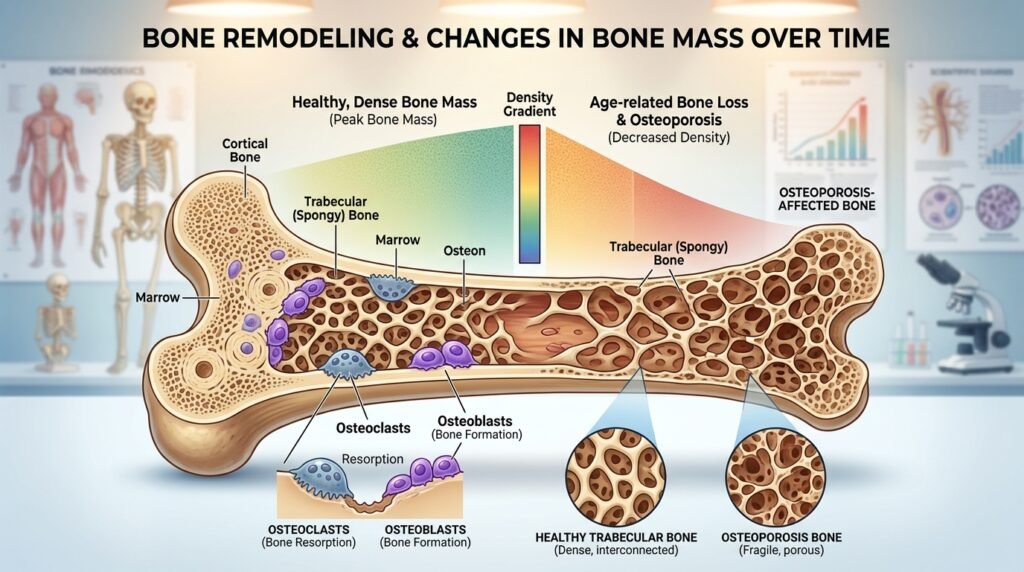
Your skeleton is living tissue that renews itself throughout life. This steady process helps repair small areas of damage and maintain strength. The pace of renewal can shift with age, hormones, nutrition, and health.
The Role of Bone Remodeling
During remodeling, osteoclasts break down older tissue, while osteoblasts build new tissue. This cycle takes place over months. When breakdown outpaces renewal, bone mass falls, and fracture risk may rise.
How Age and Hormones Influence Bone Loss
Most people reach peak bone mass around age 30. After that, mass often declines over time, though the rate varies. Estrogen and testosterone are hormone signals that help guide this balance.
When estrogen drops during menopause, bone loss can speed up. For some women, it may exceed 4% per year and continue for 10 years or longer. Individual changes differ. Calcium, vitamin D, exercise, and good health habits can support bone strength. A clinician can help explain personal risks and ways to protect bones.
3. Causes and Risk Factors for Osteoporosis
Bone strength can reflect many parts of a person’s health history. Age, inherited traits, body weight, and past fractures all help clinicians assess osteoporosis risk. These factors can affect women and men in different ways.
Age, Family History, and Menopause
Risk often rises with age, especially after a fracture or when a close relative has had one. Low body weight may also contribute. In women, lower estrogen during and after menopause can speed bone loss and cause lasting changes in bone mass. Postmenopausal women may benefit from discussing their personal risk with a clinician.
Health Conditions and Medications Linked to Bone Loss
Some conditions affect calcium, vitamin D, or hormone levels. Examples include Cushing’s syndrome, hyperthyroidism, and hyperparathyroidism. Long-term glucocorticoid therapy can lower bone density quickly, sometimes within three to six months of starting these medications.
- In one study, 19.4% of men receiving androgen-deprivation therapy for prostate cancer had a fracture, compared with 12.6% of men not receiving it.
- Share your health history and current medicines with a clinician. This can help identify factors that may weaken bone.
4. Symptoms, Fractures, and the Effects on Daily Life
A quiet decline in bone strength can affect daily life before a person notices a change. Often, osteoporosis stays hidden until a minor bump or fall causes a fracture.
Why Osteoporosis Often Goes Undetected
The disease may cause no clear warning signs. A person can have bone loss without pain or reduced movement. A low-trauma fracture may be the first clue that bone strength has changed.

- Joint Support Formula: OsteoMove Extra Strength is a comprehensive joint-support blend to aid joint …
- Advanced Joint Comfort: This dietary supplement is formulated to support healthy joint cartilage, ai…
For older women, past fractures, a history of falls, and home safety can help reveal risk. These details also help a clinician assess how daily habits may affect future fractures.
Common Fragility Fractures and Their Impact
Fragility fractures often involve the hip, spine, wrist, pelvis, or upper arm near the shoulder. They can cause pain and limit movement. Vertebral fractures may change posture and lead to lasting pain. A hip fracture can threaten independence and may require facility care.
Estimated one-year mortality after a hip fracture is about 20% for people under 70, 30% for ages 70–79.9, and nearly 40% for ages 80–89.9. These serious effects make fracture prevention important at every age.
| Fracture site | Possible effect | Daily-life concern |
|---|---|---|
| Hip | Pain and reduced mobility | Less independence |
| Spine | Posture changes and pain | Ongoing discomfort |
| Wrist, pelvis, or upper arm | Pain and limited movement | Harder daily tasks |
5. Who Should Be Screened for Osteoporosis?
Screening can find low bone mass before a fracture changes daily life. Age and personal risk help guide when to test. A clinician can weigh these details and decide whether screening fits your health needs.
“The USPSTF recommends screening for osteoporosis to prevent osteoporotic fractures in women 65 years and older.”
- Women 65 and older should discuss bone mineral density screening. Younger women may also need it if their fracture risk matches or exceeds that of a healthy 65-year-old woman.
- The Endocrine Society recommends screening men at 70. Men ages 50–69 may need screening when other risk factors apply.
- People over 50 with a fracture history should ask whether testing makes sense. A fracture after a minor fall can signal reduced bone strength.
For postmenopausal women and men, a clinician may review family history, medicines, health conditions, past fractures, and fall risk. These factors can guide screening and later treatment choices.
| Group | When to discuss screening | Key consideration |
|---|---|---|
| Women | Age 65 or older | Earlier testing may fit higher risk |
| Men | Age 70 or older | Ages 50–69 with added risk factors |
| Adults over 50 | After a fracture | Review the cause and bone strength |
6. How Bone Density Tests Diagnose Osteoporosis
A DXA scan gives a clear measure of bone strength. It helps a doctor assess bone mass and decide what other information may guide care.
What to Expect From a DXA Scan
The scan is the standard test for diagnosis. It measures bone mineral density, usually at the hip and lower spine. The results show how much mass is present in these areas.
How T-Scores and Fracture Risk Tools Are Used
A T-score compares your density with that of a healthy young adult. A score of −2.5 or lower indicates osteoporosis. When that score occurs with one or more fragility fractures, the category is severe osteoporosis.
FRAX estimates the chance of hip and major fractures over the next 10 years. It uses factors such as age, prior fracture, smoking, glucocorticoid use, and femoral neck density.
FRAX supports a full clinical review; it does not decide treatment on its own. Your doctor considers the score alongside medical history and other risk factors. This helps guide care for women, including postmenopausal women, and supports informed decisions about fracture prevention.
7. Osteoporosis Treatment Options: An Overview
Care can pair medicine with daily habits that support bone health. A doctor may weigh fracture history, bone density, overall risk, and personal preferences before suggesting osteoporosis treatment. The goal is to protect strength and lower the chance of future breaks.
When Medication May Be Recommended
Medication may suit people with osteoporosis or a high chance of fracture. This can include postmenopausal women and men with qualifying diagnoses. Options include bisphosphonates, denosumab, raloxifene, calcitonin, and bone-building medicines such as teriparatide or romosozumab. Alendronate, risedronate, zoledronic acid, and denosumab are approved for women; several also serve men.
How Care Can Reduce Fracture Risk
Different medicines work in different ways. Some slow bone breakdown, while selected therapies help build new bone for people at high risk. Other classes include estrogen agonists or antagonists, RANKL inhibitors, parathyroid hormone analogues, and calcitonin. A plan may also include enough calcium and vitamin D, plus activity that supports balance and strength.
“The goal is stronger bones and fewer fractures.” Ask a doctor about likely benefits, possible effects, and follow-up. The best osteoporosis treatment depends on each person’s health and risk.
8. Bisphosphonates and Other Antiresorptive Medications
Antiresorptive medicines slow the breakdown of bone. Clinicians may prescribe them to lower fracture risk and help protect bone density. The right option depends on health history, preferences, and possible side effects.
Common Bisphosphonates and How They’re Taken
Common bisphosphonates include alendronate, risedronate, ibandronate, and zoledronic acid. Alendronate comes as a daily or weekly tablet. Risedronate is available daily, weekly, or monthly. Oral directions vary by product, so follow the label and your clinician’s advice.
Ibandronate comes as a monthly tablet or an injection every three months. Zoledronic acid is given by infusion once a year. These medicines can cause effects such as heartburn or muscle pain.
Denosumab, Raloxifene, and Calcitonin
Denosumab is usually injected every six months. Keep each dose on schedule: stopping without a care plan may lead to several spine fractures. Raloxifene can lower spine-fracture risk in postmenopausal women. It acts like estrogen in some tissues. Calcitonin may suit selected cases. Ask about benefits, side effects, and how calcium intake fits your plan. Both women and men can discuss these options with a clinician.
| Medication | Common schedule | Key point |
|---|---|---|
| Alendronate | Daily or weekly tablet | Follow product-specific oral directions |
| Risedronate | Daily, weekly, or monthly tablet | Schedule depends on the product |
| Ibandronate | Monthly tablet or injection every three months | Two forms are available |
| Zoledronic acid | Yearly infusion | Given by a health professional |
| Denosumab | Injection every six months | Plan with a clinician before stopping |
9. Bone-Building Medications for People at High Fracture Risk
For some people with very high fracture risk, a clinician may consider medicines that help build new bone. These options have specific schedules and limits, so follow-up care matters.
Teriparatide and Abaloparatide
Teriparatide prompts new bone formation. It may suit selected men and women with severe osteoporosis and high risk of fractures. Abaloparatide is approved for postmenopausal women at high fracture risk and can lower spine and other fracture risks.
Both are self-injected each day and are limited to two years. A clinician will plan follow-up therapy to help maintain bone gains. These drugs may not suit people with certain bone cancer histories or prior radiation involving bone. Ask about possible effects, including pain or other side effects.
Romosozumab and Follow-Up Therapy
Romosozumab is given once a month for 12 months. It can lower fracture risk, then another medication helps prevent bone loss. Its possible effects include a higher risk of heart attack or stroke.
“Discuss heart and stroke history before starting this therapy.”
Women who had either event in the prior year should not use romosozumab. Your clinician can compare these treatments and help choose a plan that fits your health.
10. Choosing Treatment for Women, Men, and Secondary Osteoporosis
Care should fit a person’s health, not just a scan result. A doctor considers fracture risk, medical conditions, medication history, and whether bone loss stems from age or another disease.
- Approved medications for men include alendronate, risedronate, zoledronic acid, teriparatide, and denosumab. Research in men remains less extensive than research in women.
- Denosumab can protect bone mass in men receiving androgen-deprivation therapy for prostate cancer. This cancer therapy can raise fracture risk.
- For postmenopausal women, clinicians weigh past fractures, bone density, possible effects, and personal preferences. Estrogen-related therapy may suit some women, but it has risks to review.
- In men with clearly low testosterone, hormone therapy may raise bone density. However, it is not usually the primary treatment for osteoporosis.
Primary disease and secondary causes may call for different plans. Ask how each option fits your health history, risk factors, and goals. Men and women can review the benefits and limits of each therapy with their care team.
11. Natural Bone Care With Calcium, Vitamin D, and Healthy Habits
Daily choices can support bone health at every age. Food, movement, and other habits work alongside a clinician’s care plan; they do not replace prescribed treatment.
Getting Calcium From Food and Supplements
Calcium supports bone mass. Aim for 1,000 mg each day for men ages 50–70. Women 51 and older and men 71 and older need 1,200 mg daily. Choose foods such as dairy products, fortified drinks, or calcium-set tofu first.
“Food first; supplements fill the gap.”
If your meals fall short, ask a clinician whether a supplement fits your needs. Health conditions and medications can affect that choice.
Vitamin D, Smoking, and Alcohol Considerations
Vitamin D helps the body absorb calcium. Adults ages 51–70 need 600 IU daily; adults over 70 need 800 IU. Ask a clinician if you need a supplement or a different amount.
- Do weight-bearing exercise as your health allows.
- Avoid smoking and limit alcohol.
- Review lifestyle changes and supplements with a clinician, especially if you have other health concerns.
12. Exercise and Fall Prevention to Protect Your Bones
Movement and safer surroundings can support daily function and lower the chance of injury. These steps complement medical care, but each plan should match a person’s ability and health.
Weight-Bearing and Strength-Building Activities
Walking, stair climbing, and strength exercises can help maintain bone strength and mobility. Balance practice may also help. Start at a comfortable level, and ask a clinician or physical therapist about safe activity if pain, past fractures, or spinal changes affect movement. Adequate calcium supports bone health, but exercise should fit your needs.
Consistency matters more than intensity. A clinician can help adjust activity for your abilities and other risk factors.
Practical Changes to Make Your Home Safer
Falls cause many fractures in older women. Leg weakness, changes in gait, and balance problems can raise risk. One study linked an inability to stand on one leg without help for five seconds with 2.1 times the relative risk of an injurious fall.
- Improve lighting and clear walking paths.
- Remove loose rugs and other trip hazards.
- Review medicines and health conditions with a clinician; some can affect balance and mobility.
Small home changes can help make everyday movement safer. Ask your care team which steps fit your situation.
13. Medication Side Effects, Monitoring, and Ongoing Care
Regular check-ins help keep an osteoporosis plan safe and useful. Your doctor can review how you feel, your fracture risk, and whether the plan still fits your goals.
Discussing Benefits and Risks With Your Doctor
Before starting or changing therapy, discuss benefits, side effects, costs, and personal preferences. Oral bisphosphonates may cause heartburn or irritation in the esophagus. Rare concerns include jaw problems and unusual thigh-bone fractures.
Take denosumab on schedule. Stopping it without medical advice may raise the risk of several spine fractures. Tell your doctor about pain, new health concerns, or changes in your medical history. These details can guide medication choices for women and men.
Follow-Up Bone Density Testing and Treatment Changes
The National Osteoporosis Foundation recommends checking bone mineral density one to two years after therapy begins, then every two years. Some guidance considers testing at least every four years; timing varies. Your doctor can weigh results, calcium intake, bone loss, and risk when reviewing treatments.
| Review point | Suggested timing | What guides the decision |
|---|---|---|
| First density check | One to two years after starting therapy | Starting results and health history |
| Ongoing checks | Often every two years | Response, risk, and clinical guidance |
| Plan changes | When concerns or results warrant review | Benefits, effects, and personal goals |
14. Conclusion
Osteoporosis can weaken bone structure and raise the chance of fractures, often before symptoms appear. Screening and timely care matter for women and men, especially as they age.
DXA density results, fracture history, and overall risk help shape an individualized treatment plan. Medication options include antiresorptive drugs and bone-building therapy. For postmenopausal women, clinicians may weigh estrogen levels and estrogen-related choices. Health history, including cancer, can affect which treatments are safe.
Daily habits also support care: get enough calcium and vitamin D, do weight-bearing activity, avoid smoking, limit alcohol, and reduce fall hazards at home. These steps complement prescribed care.
Ask your clinician about osteoporosis treatment, follow-up scans, and when to review your plan. Together, you can track density and adjust care as your needs change.