
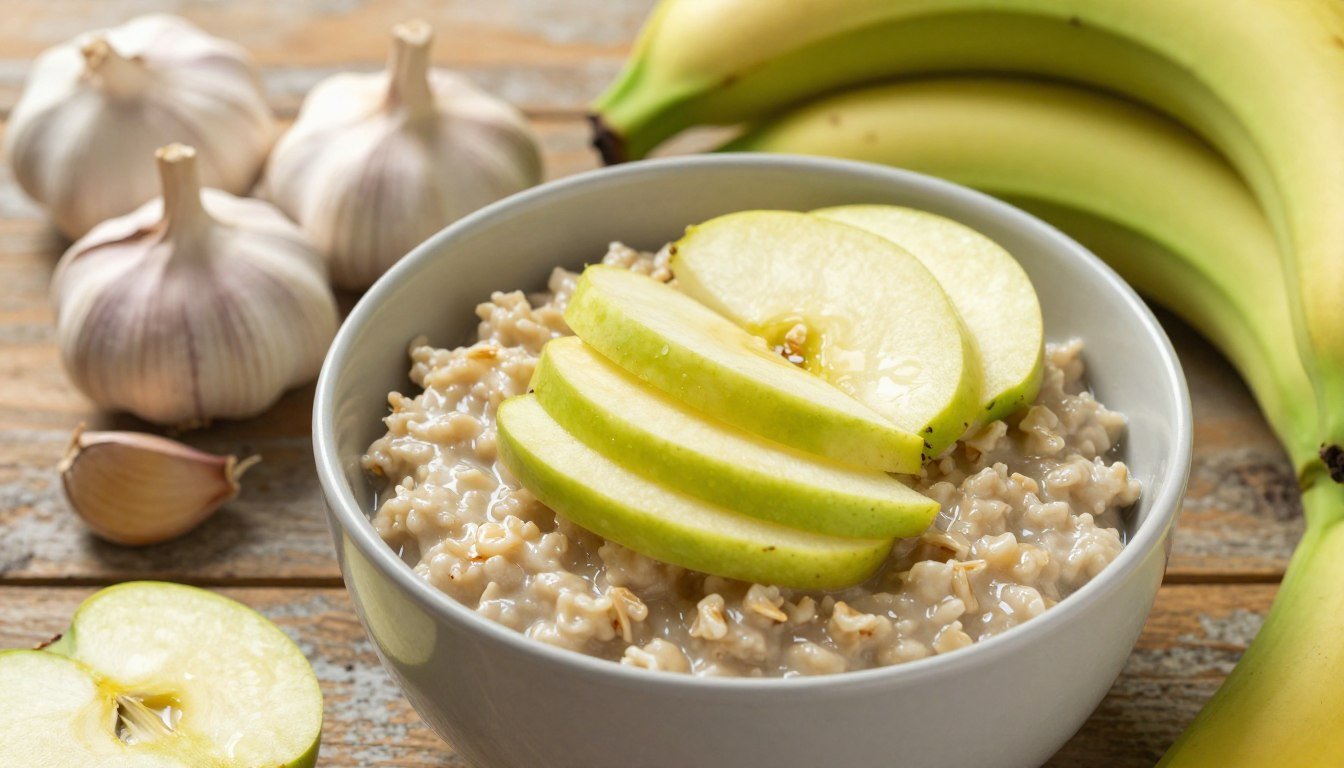
Garlic, onions, oats, apples, and green bananas are practical prebiotic foods for adults seeking to support gut health through everyday meals. Their fibers give gut microbes material to use, but food choices do not cure a digestive condition.
Some fibers resist digestion in the small intestine and reach microbes farther along the gut. That can make familiar ingredients useful parts of meals, not special products that require a new diet. People may choose options based on taste, access, and tolerance. A varied eating pattern is a more useful starting point than searching for one perfect food.

Adults can build meals around whole grains, vegetables, fruit, legumes, and seeds. These foods also supply nutrients that support overall health. A person with ongoing digestive symptoms may need more than a change in food choices, especially when symptoms affect daily life.
The examples here offer flexible ways to add plant foods. People can choose one familiar option, then notice how it fits their meals and digestion. No single food works the same way for everyone.
Key Takeaways
- Garlic, onions, oats, apples, and green bananas offer different fibers.
- Prebiotic ingredients reach gut microbes, where microbes can ferment them.
- Food tolerance varies, especially for people with irritable bowel syndrome.
- A mix of whole grains, vegetables, fruit, and legumes supports dietary variety.
- Persistent digestive symptoms call for advice from a healthcare professional.
What Makes Prebiotic Foods Different?
A prebiotic is a substrate that host microorganisms selectively use in a way that confers a health benefit. That selective use sets prebiotic ingredients apart from fiber that microbes do not use in the same way.
In 2017, the International Scientific Association of Probiotics and Prebiotics defined a prebiotic as a substrate selectively utilized by host microorganisms that confers a health benefit. Prebiotic ingredients resist digestion by host enzymes, so they remain available for microbial fermentation. Fructooligosaccharides (FOS) and galactooligosaccharides (GOS) are examples of prebiotic ingredients.
How microbes use prebiotic ingredients
Gut bacteria can ferment certain ingredients in the large intestine. Fermentation produces short-chain fatty acids (SCFAs), which are compounds linked to several body processes. The types and amounts of products depend on the ingredient and the microbes present.
Dietary fiber occurs in whole grains, vegetables, fruit, and legumes. Some fibers meet the prebiotic definition, while others may offer different effects or pass through the gut with less fermentation.
| Ingredient type | Food examples | How microbes can use it |
|---|---|---|
| Inulin | Chicory root, onions | Resists digestion and can be fermented |
| FOS | Onions, garlic | Provides fermentable fructose chains |
| GOS | Legumes | Provides fermentable carbohydrate |
How prebiotics differ from probiotics
Prebiotics supply material for microbes already in the gut. Probiotics are live beneficial microorganisms that can provide a health benefit when consumed in adequate amounts. They serve different roles, even when a product contains both.
A food’s fiber content alone does not make every fiber a prebiotic.
Food labels may use terms such as inulin or FOS for specific ingredients. The name can help identify what a product contains, but the whole food still contributes other nutrients.
Garlic, Onions, and Leeks
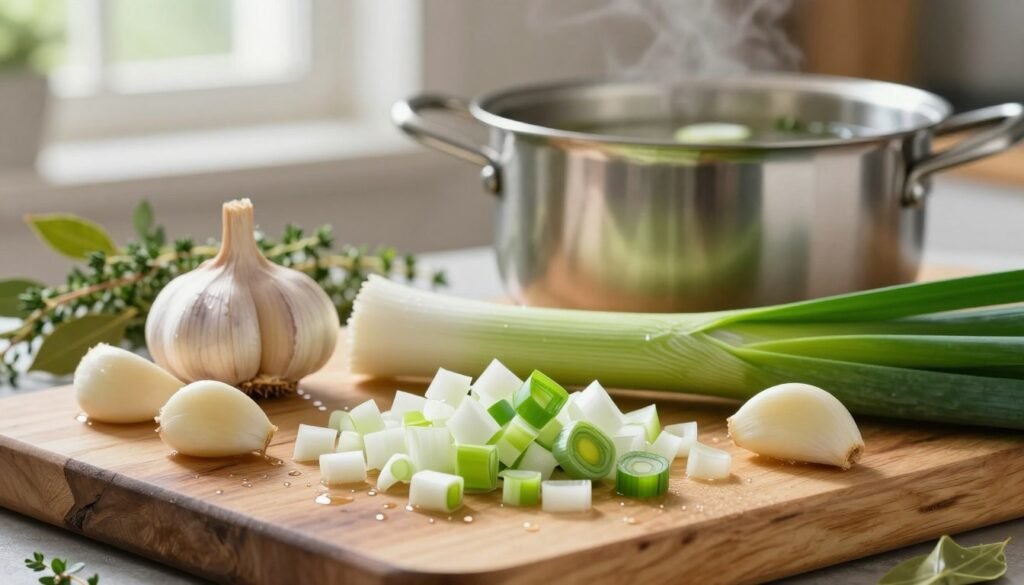
A minced garlic clove stirred into a dressing is one easy way to add an Allium vegetable to a meal. Garlic, onions, and leeks belong to the same Allium family and provide fermentable carbohydrates.

Onions contain inulin and FOS, while leeks contain inulin. These ingredients can reach gut bacteria, but the amount in a serving varies with the food and portion.
Garlic
Garlic can promote beneficial Bifidobacteria, a group of bacteria found in the gut. Its sharp flavor also makes a small amount useful in a dressing, sauce, or cooked dish.
For a simple dressing, a person can mince garlic and mix it with oil, vinegar, and herbs. Cooking softens garlic’s bite, while raw garlic keeps a stronger taste. Neither method needs to be treated as the only useful choice.
Onions
Onions contain both inulin and fructooligosaccharides. A chopped onion can flavor soups, grain dishes, or cooked vegetables. It can also be served raw in salads or sandwiches.
Yellow, red, and white onions differ in flavor, so a cook can pick the type that suits a dish. Their fermentable carbohydrates may not suit everyone with IBS, even when the food is common in everyday cooking.
Leeks
Leeks contain inulin and bring a mild, savory taste to soups and stews. The pale lower parts can be sliced and cooked until tender. Their leaves can add flavor to broth.
These vegetables offer more than one way to add fiber, yet taste and tolerance matter. People who know onions or garlic trigger symptoms can choose another source from the list rather than forcing these ingredients.
Inulin-Rich Roots: Chicory, Jerusalem Artichoke, and Burdock
Chicory root is a concentrated inulin source, while Jerusalem artichoke and burdock add other ways to use inulin-rich roots. Inulin is a fructan, a carbohydrate chain made of 2-60 fructose units.
Inulin with fewer than 10 monomeric units is also recognized as FOS. The amount and type of fiber in a root vegetable can differ, so a small serving may be a practical first taste.
Chicory root
Inulin makes up 68% of chicory root’s dry weight, making it a concentrated source. Chicory root can be chopped and cooked in soup or stew. Its earthy taste works well with other vegetables.
Some products use chicory root as an ingredient, so it may appear in foods beyond the produce section. The amount in a serving depends on the product and its recipe.
Jerusalem artichoke
Jerusalem artichokes contain just under 2 g of inulin-rich dietary fiber per 100 g. Despite the name, they are a tuber rather than a type of globe artichoke.
They can be sliced into a salad or cooked like potatoes. Roasting or boiling makes them tender and brings out a mild, nutty flavor. Their texture also works in soups.
Burdock root
Burdock root contains inulin and FOS. It is often sliced or cut into thin strips before cooking, since a large piece can stay firm in a dish.
A cook can add burdock to a stew with other root vegetables, or simmer it until tender. Its earthy taste pairs well with broth and herbs. A smaller portion can be a sensible first try for anyone unfamiliar with these roots.
Asparagus, Dandelion Greens, and Jicama
Thinly sliced jicama adds a crisp, mildly sweet element to a salad. Asparagus and dandelion greens offer other ways to include vegetables with prebiotic fiber in everyday meals.
These are options, not a required daily set. A person can use one when it fits a meal, then choose different vegetables on other days.
Asparagus
Asparagus contains inulin. Its spears can be lightly cooked until tender, or sliced thinly and added to a salad. A quick roast or steam keeps preparation simple.
Asparagus also works in an omelet, pasta dish, or grain bowl. Cooking changes its texture, so the choice can depend on whether a person prefers a crisp or soft bite.
Dandelion greens
Dandelion greens contain fiber, much of it from inulin. The leaves taste bitter, especially when eaten raw, and can be mixed with milder greens in a salad.
Cooking softens the leaves and can make their flavor less sharp. They can be added to soup or sautéed with a small amount of oil. The greens are a vegetable choice, not a required health food.
Jicama
Jicama contains inulin and has a crisp texture when raw. It can be peeled, sliced, and served as a snack, or cut into sticks for a salad.
Its mild flavor works with citrus, herbs, and other vegetables. People can select a serving that feels comfortable and use a different vegetable if jicama does not suit them. The most useful choice is the one that fits a person’s usual meals and preferences.
Oats, Barley, and Beans
A bowl of oatmeal is an uncomplicated way to include a whole grain that contains beta-glucan. Barley also supplies beta-glucan, while beans and lentils add other types of dietary fiber.
Legumes are among the foods that provide GOS. Oats, barley, beans, and lentils can therefore bring different fermentable ingredients to meals.
Oats
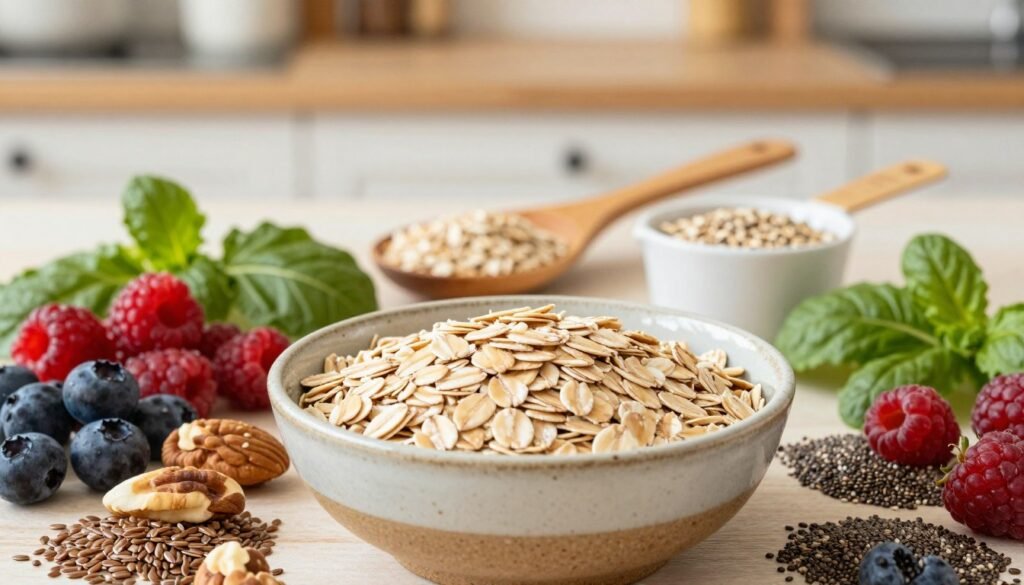
Oats contain beta-glucan, a soluble fiber. A warm bowl of oatmeal can be topped with fruit or seeds, or oats can be stirred into yogurt. They also work in savory dishes.
Rolled oats and steel-cut oats have different textures and cooking times. Either can make a familiar breakfast, with toppings chosen to match a person’s tastes.
Barley
Barley contains beta-glucan and adds a chewy texture to soups. It can also be served as a side dish or mixed with vegetables and beans.
Pearled barley cooks more quickly than less processed forms. A cook can use the type available and follow its package directions, then add it to a soup near the start of cooking.
Beans and lentils
Beans and lentils are plant foods that supply dietary fiber, including GOS in legumes. They can be added to soups, salads, or a grain bowl for a filling meal.
Canned beans offer a quick option. Rinsing them can remove some of the canning liquid, and a person can adjust the serving to individual tolerance. Lentils cook into stews and soups without much fuss.
These foods can fit into meals in many forms, from a breakfast bowl to a pot of soup. Rotating oats, barley, beans, and lentils gives meals more variety than relying on one grain.
Apples, Green Bananas, and Flaxseeds
An apple brings pectin, a soluble fiber, while a green banana offers resistant starch. Flaxseeds provide dietary fiber in a small, easy-to-mix ingredient.
Each food offers a different fiber, so one does not need to replace the others. A person can use them in familiar meals rather than changing an entire diet.
Apples
Apples contain pectin, a soluble fiber with prebiotic qualities. Research suggests pectin fermentation can increase butyrate, a short-chain fatty acid. More human research is needed to fully establish its effects.
A chopped apple can top oatmeal or add crunch to a salad. Apples can also be stewed until soft, which changes their texture without removing their place in a varied diet.
Green bananas
Green bananas contain resistant starch, which gut bacteria can ferment. Their firmer texture and less sweet taste differ from ripe bananas, so they may work better in certain dishes.
A green banana can be blended into a smoothie or cooked in a suitable dish. A person can choose the form that suits the recipe and their taste.
Flaxseeds
Flaxseeds provide dietary fiber and can be stirred into oatmeal, yogurt, or a smoothie. Ground flaxseed mixes more easily into soft foods than whole seeds.
A spoonful can add a mild, nutty flavor to a meal. It should complement rather than replace other plant foods. Ground flaxseed is easy to mix into a meal, but it should complement rather than replace other plant foods.
Resistant Starch Sources Beyond the Produce Aisle
Resistant starch appears in several food forms, from raw potatoes and maize to cooked and cooled potatoes. It is not limited to one produce item or one type of meal.
Different sources contain resistant starch in different forms. The food examples below show how grains, seeds, potatoes, and prepared products can all supply it.
| Source group | Food or product | Form named |
|---|---|---|
| Grains and seeds | Milled grains and seeds | Milled |
| Potatoes | Raw potatoes | Raw |
| Maize | Maize | Maize food forms |
| Fruit | Green bananas | Green |
| Potatoes | Cooked and cooled potatoes | Cooked, then cooled |
| Prepared products | Cornflakes, bakery products, or fried rice chips | Ready to eat |
Some of these foods are simple ingredients, while others are made products. That distinction matters when someone chooses meals for overall nutrition, since resistant starch is only one part of a food’s makeup.
People can include a suitable source as part of their usual eating pattern. The food examples are options, not a checklist that must all appear in one diet.
Build a Practical Prebiotic Eating Routine
A practical routine can pair one familiar fiber-rich food with a meal already in the rotation. Whole grains, vegetables, fruit, and legumes can support dietary variety without making meals feel like a project.
The US Daily Value for dietary fiber is 28 g on a 2,000-calorie diet, though individual needs can differ. It is a reference point, not a personal target for every adult.
Combine familiar foods across meals
Small combinations can bring more fiber into meals without changing the whole menu. These ideas use foods that can fit into common breakfasts, lunches, and dinners.
- Oatmeal with chopped apple
- Beans served with a whole grain
- Cooked vegetables mixed with barley
- Ground flaxseed added to a familiar meal
Meet fiber needs with a varied diet
Dietary fiber comes from whole grains, vegetables, fruit, and legumes. Different plant foods also provide vitamins, minerals, and other nutrients, so variety can support overall nutrition.
Regular movement and adequate hydration are useful parts of a healthy routine. They support general well-being, but they do not promise a treatment effect for a digestive condition.
A person can keep meals practical by using foods already found in the kitchen. The US Daily Value is based on a 2,000-calorie diet, and personal needs may differ with individual circumstances. A varied plate is a more useful goal than maximizing one ingredient.
Increase Fiber Without Unnecessary Discomfort
A person who gets gas or bloating after adding several high-fiber foods at once can reduce the portions and change one food at a time. Prebiotic fiber is fiber used by gut microbes, but each person’s tolerance differs.
FODMAP-rich foods can trigger IBS symptoms in some people, and inulin can cause symptoms, especially in large amounts. That does not mean every person with IBS must avoid every food that contains these ingredients.
Start with portions that feel manageable
A modest serving can be easier to assess than several new foods at once. Three useful steps can help a person notice which changes feel comfortable:
- Begin with a modest portion.
- Increase gradually as tolerated.
- Track foods and symptoms in a simple log.
A short note can record the food, the portion, and when symptoms appear. That record may help a person spot patterns without assuming that one meal explains every symptom.
Account for IBS and FODMAP sensitivity
FODMAPs are fermentable carbohydrates found in some foods. For some people with IBS, they can worsen gas, bloating, or pain. Inulin is one ingredient that may cause symptoms, particularly in large amounts.
People with IBS or a prescribed low-FODMAP diet should consult a healthcare professional before making substantial changes. Individual guidance can help keep a restrictive diet from removing foods unnecessarily. General health information may not suit every person, as explained in this health information disclaimer.
If symptoms persist or worsen, repeated self-directed diet changes may not be the right response. Persistent or worsening symptoms deserve clinical guidance instead of repeated self-directed diet changes.
Prebiotics and Probiotics Serve Different Roles
Prebiotics feed microorganisms already in the gut, while probiotics provide live microorganisms. The difference is what each provides: a substrate for microbes or live beneficial microorganisms.
Synbiotics contain both prebiotic and probiotic components. A food or product may combine the two, but the terms describe distinct roles in the diet.
| Type | What it provides | Example source and role |
|---|---|---|
| Prebiotics | Substrates used by host microorganisms | Foods with fermentable ingredients |
| Probiotics | Live microorganisms | Yogurt with live cultures |
| Synbiotics | Prebiotic and probiotic components | A product combining both |
Yogurt, kefir, sauerkraut, and kimchi are fermented foods that may contain live cultures. Their exact contents can vary by product and preparation, so fermented food does not always mean the same thing as a probiotic supplement.
Probiotics are live microorganisms that can provide health benefits when consumed in adequate amounts. A food’s role depends on its ingredients and cultures, not just on whether it has been fermented.
Prebiotics and probiotics can appear in the same eating pattern without being interchangeable. The two terms describe different roles, so a food or supplement should not be called a probiotic just because it contains fiber.
Food Sources, Supplements, Powders, and Drinks
A product labeled prebiotic may contain an isolated fiber, so the ingredient list matters more than the front-label claim. Prebiotic supplements and prebiotic powder may include added ingredients and serving directions.
Prebiotic drinks vary by formulation and are not automatically equal to whole foods. Probiotic supplements differ because they contain live microorganisms.
| Label term | Expanded name | Identified here as a prebiotic ingredient |
|---|---|---|
| Inulin | Inulin | Yes |
| FOS | Fructooligosaccharides | Yes |
| GOS | Galactooligosaccharides | Yes |
| TOS | Transgalactooligosaccharides | Label term listed |
| Wheat dextrin | Wheat dextrin | Label term listed |
Other ingredient names on food labels can include acacia gum, psyllium, and polydextrose. A label check can help a buyer understand the product before using it.
- Check the named ingredient.
- Read the serving size and directions.
- Look for added sugar.
- Review other ingredients for personal needs.
People taking a supplement for a health condition should review the choice with a healthcare professional.
What Human Trials Suggest About Gut Health
Human trials suggest that recognized prebiotics can change gut microbes and fermentation products, though responses are not identical for everyone. A 2026 review analyzed 22 randomized controlled trials conducted over the preceding decade.
The trials used recognized prebiotics as the sole intervention. They consistently found increases in Bifidobacterium, Lactobacillus, and SCFA production, along with changes in several measured health outcomes.
Reported improvements included stool frequency and consistency, intestinal barrier function, and immune responses. The studies differed in prebiotic type, dose, and duration, and results varied among individuals.
SCFAs are metabolites linked with digestive, immune, metabolic, and cognitive health. Those links do not guarantee a specific benefit for an individual who eats a particular food or takes a supplement.
People interested in the topic can read further in Prebiotics For Gut Health: Benefits, Foods And Tips. Research findings can change as new studies appear, and study results do not replace personal medical advice.
The range of results supports realistic expectations rather than a promise of a specific benefit.
Preventing Vitamin K Deficiency Bleeding
Prebiotic foods do not prevent vitamin K deficiency bleeding in newborns. Vitamin K deficiency bleeding, also called VKDB, can occur in newborns.
A vitamin K shot given at birth is the standard prevention for newborns. Food choices and supplements do not replace this standard newborn vitamin K prophylaxis.
VKDB is a specific health concern in early life, not a condition that can be prevented by choosing foods for gut microbes. Parents and caregivers should discuss the newborn’s care with the baby’s healthcare professional.
Questions about the shot, its timing, or a newborn’s needs are best raised with the clinician caring for the baby. A parent with questions about the vitamin K shot should speak with the baby’s healthcare professional before making a decision.
Prepare These Foods Without Chasing a Raw-Only Rule
A sliced apple, a stewed apple, and cooked asparagus can all fit into a varied eating pattern. Raw is not a rule for every food that contains fiber.
Cooking can change texture and fiber structure, but raw food is not always more beneficial. A safe, enjoyable way to prepare a food is more likely to fit a lasting routine.
- Chicory root can be chopped into soup or stew.
- Jerusalem artichokes can be sliced into salad or cooked like potatoes.
- Apples can be eaten fresh or stewed until soft.
- Asparagus can be served raw in salad or cooked.
Cooking methods can be chosen for taste, texture, and ease. A person can roast, steam, simmer, or slice foods based on the dish, while following safe food-handling practices.
Some people prefer the crunch of raw vegetables, while others find cooked versions easier to eat. The best preparation is one that suits the food and the person’s tolerance.
When Digestive Symptoms Need More Than Self-Care
There is no universal list of three foods that every person should avoid for gut health. Dietary triggers differ, and FODMAP-rich foods may worsen symptoms for some people with IBS.
Persistent symptoms or concerning changes deserve professional assessment. A healthcare professional can help decide whether a condition-specific diet is appropriate and assess symptoms that do not settle.
A simple self-care check can help keep food changes focused:
- Note symptoms alongside food patterns.
- Avoid broad elimination diets without professional guidance.
- Seek an assessment for persistent symptoms or concerning changes.
A clinician can consider a person’s history and symptoms before suggesting a diet change. A broad food blacklist can remove foods without showing which ones actually cause a problem.
Digestive symptoms can also have causes unrelated to food choices. For example, foodborne illness such as salmonellosis can cause stomach problems and may need medical care.
Persistent digestive symptoms need an individual assessment, not a generic blacklist.
People should seek timely care for new or severe changes rather than relying only on food experiments. A clinician can help set a safe plan based on the symptoms and medical history.
Conclusion
A healthier gut-supporting routine begins with one realistic choice, not a perfect menu. A varied pattern of fiber-containing plant foods can support gut microbes, while tolerance and medical needs still matter.
One familiar plant food at a regular meal is a useful place to start. The response can guide the next choice, and persistent symptoms call for clinical advice rather than guesswork.
Add one suitable plant food to a meal this week, then build from what feels comfortable.